
Mat and Reformer 101 at Westdale Pilates — A Beginner's Guide
What is Pilates, really?
If you've ever peeked into a studio and seen people moving slowly on mats or on sliding beds with springs and straps, you've already seen Pilates in action. At its core, Pilates is a low-impact form of exercise that focuses on strength, mobility, and alignment, with a special emphasis on your core and posture.
Unlike workouts that push you to go harder and faster, Pilates aims for controlled, precise movement. You'll build strength from the inside out, improve body awareness, and learn how to move more efficiently—without needing to jump, sprint, or do anything high-impact. In Westdale, that means you can finish class feeling taller, calmer, and more connected to your body, then walk to grab a coffee without feeling wiped out.
Mat vs. Reformer: What's the difference?
When you start exploring Pilates at Westdale Pilates, you'll usually come across two main styles: mat and reformer. Both share the same principles, but the experience feels a little different.
Mat Pilates
Mat Pilates is done on a cushioned mat on the floor, sometimes with small props like bands, balls, or a magic circle. You use your own body weight for resistance while focusing on:
Core strength and stability
Spine mobility and alignment
Hip and shoulder mobility
Breath and control
Mat classes are fantastic for building foundational strength and body awareness. They're also incredibly practical: many of the exercises can be adapted for you to do at home between studio sessions, which makes them a great entry point for beginners.
Reformer Pilates
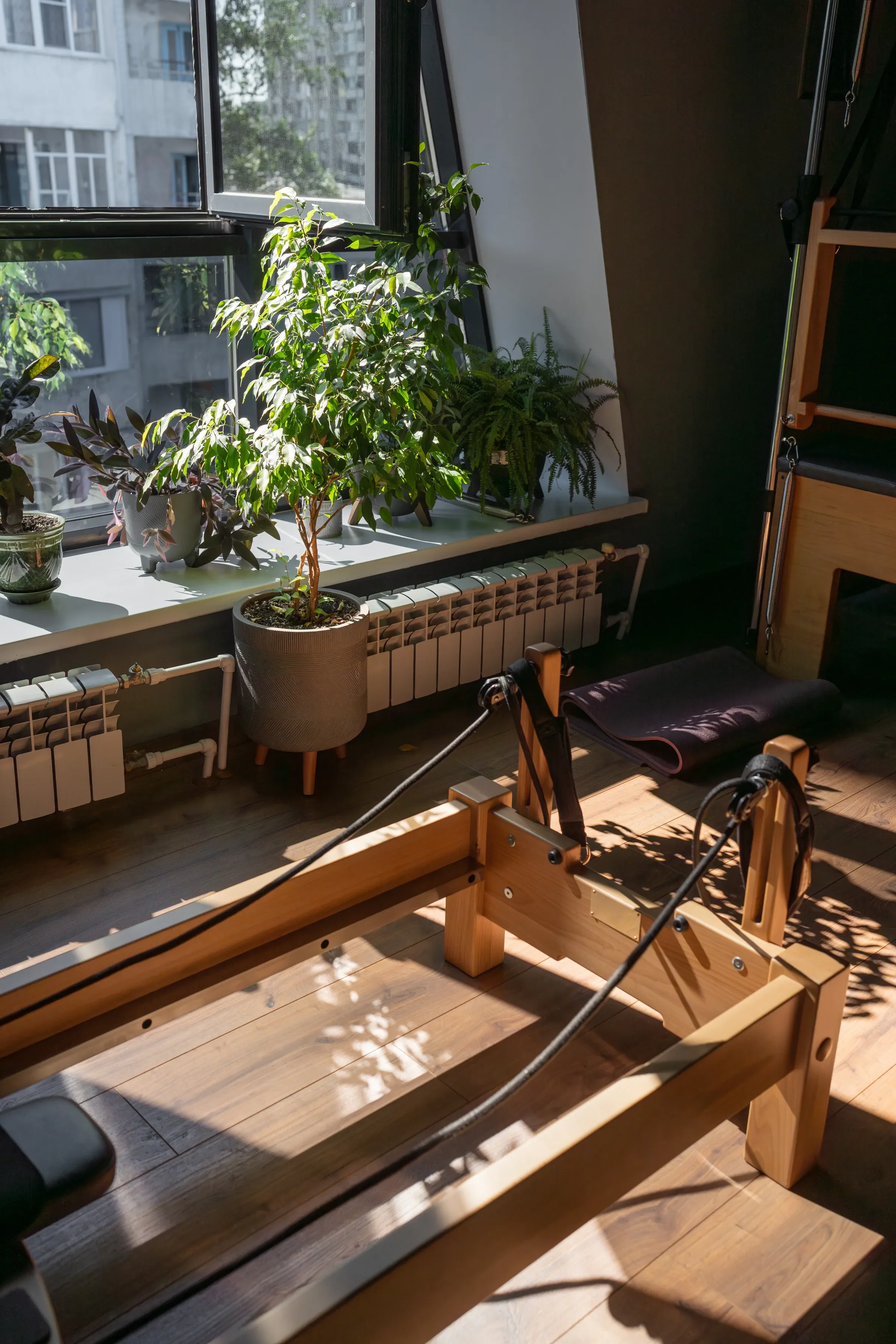
Reformer Pilates uses the classic Pilates machine: a moving carriage with springs, a footbar, straps, and adjustable components. The springs add resistance and support, helping you move through:
Full-body strength work
Deep core activation
Controlled stretching
Balance and coordination challenges
Many beginners are surprised to find that reformer can feel very supportive. The springs and straps help guide your movement, and your instructor can adjust the setup to match your strength, mobility, and comfort level.
Which should you start with?
There's no one "right" answer. Some beginners in Westdale like to start with mat to learn the basics on the floor; others feel more motivated by the variety and feedback of the reformer. At Westdale Pilates, we're happy to help you choose a path—or mix both—based on your goals and how your body feels.
What to expect in your first Pilates class
Whether you're stepping into a mat or reformer class, your first visit to Westdale Pilates will feel guided and supported.
Warm welcome and quick chat — Your instructor will ask about your goals, any injuries, and your movement history. This helps us offer appropriate modifications and keep you feeling safe.
Introduction to the setup — In mat class, we'll show you your spot, props, and how to use them. In reformer class, we'll explain how the carriage moves, what the springs do, and how to get on and off the equipment comfortably.
Gentle warm-up — You'll start with simple exercises to connect to your breath and wake up your core and postural muscles, whether you're on the mat or the reformer.
Guided full-body work — Expect a mix of core, hip, glute, shoulder, and back exercises. We focus on form and control rather than speed or intensity, with options to make things easier or more challenging.
Cool-down and questions — You'll finish with stretching and a chance to ask questions about the exercises, class types, or what's best to try next.
Most beginners leave saying something like, "That was more accessible than I expected—and I feel muscles I didn't even know I had."
What to wear and bring
You don't need special gear to get started with Pilates at Westdale.
Clothing — Wear comfortable, stretchy clothing that lets you move freely. Slightly fitted pieces work best so your instructor can see your alignment and so fabric doesn't get in the way on the mat or reformer. It's entirely up to you.
Socks — Grip socks are ideal, especially for reformer work, because they help you feel secure on the carriage. They work well in mat classes too.
Water — Bring a water bottle to sip as needed. Pilates is low-impact, but you'll still be working. You can refill your bottle in the studio.
An open mind — You're not expected to know the terminology, choreography, or equipment. Think of your first few classes as learning a new movement language—your instructor is there to guide you.
Is mat or reformer better for beginners?
Both can be beginner-friendly; it's more about what you're looking for.
Choose Mat Pilates if you:
Prefer a simple setup and like the idea of exercises you can repeat at home
Want to focus on fundamentals and small, precise movements
Enjoy feeling grounded on the floor
Choose Reformer Pilates if you:
Are curious about the equipment and like variety
Want more external feedback from springs and straps
Appreciate how the machine can both support and challenge you
Many Westdale students eventually do both: mat classes to reinforce technique and build endurance, plus reformer sessions for variety, strength, and that satisfying "I worked every muscle" feeling.
How to start your Pilates journey at Westdale
Here's a simple way to begin—whether you're leaning toward mat, reformer, or both:
Explore the schedule — Check the class options and descriptions on the Westdale Pilates website. Look for words like "Beginner," "Foundational," or "Level 0/Level 1."
Pick your first step — Choose one style—mat or reformer—for your very first class so you don't feel overwhelmed. You can always add the other style later once you feel more comfortable.
Book your spot — Our classes are intentionally small, which means more personal attention and room for questions. Booking secures your place and helps us plan for new students.
Arrive a bit early — Come 10–15 minutes before class time to meet your instructor, share any concerns, and settle in on your mat or reformer without rushing.
Commit to a handful of classes — Pilates really "clicks" over a few sessions. By your third or fourth mat or reformer class, you'll start to recognize the movements, understand the cues, and notice changes in how you move and feel.
Your Pilates home in Westdale
Starting something new can feel like a big step, but you don't have to figure it out alone. At Westdale Pilates, we love welcoming beginners—whether you're rolling out a mat for the first time or climbing onto a reformer feeling a little unsure.
With a mix of mat and reformer options, you can build a practice that fits your body, your goals, and your life in Hamilton. If you've been curious about Pilates, consider this your sign: your spot is ready, and we're excited to help you get started.