
Pilates for Back Pain: A Guide to Injury Recovery
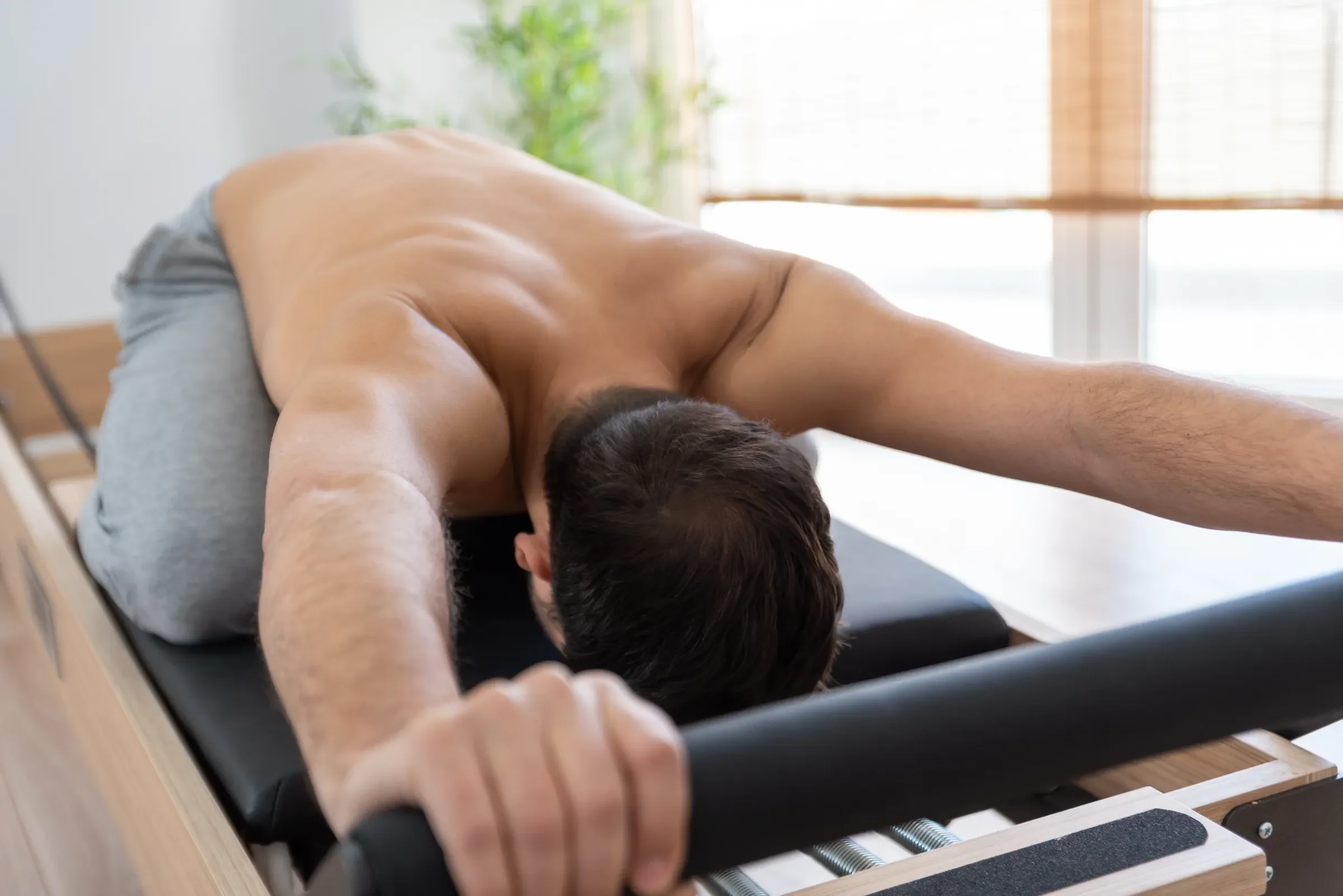
A gentler way back from back pain
If you've ever hurt your back, you know how quickly everyday life can feel daunting. Sitting, standing, lifting groceries, even rolling out of bed can suddenly feel like a risk. It's no surprise that many people with back pain avoid moving altogether—but that can actually make things worse over time.
Pilates offers a different path: one that focuses on slow, controlled movement, building support around your spine instead of pushing you through high-impact exercise. When guided by a qualified instructor and cleared by your healthcare provider, Pilates can be a powerful tool in your recovery toolkit.
Why backs get so vulnerable
Back pain can come from many causes: a sudden injury, years of poor posture at a desk, repetitive strain, or conditions like disc issues or arthritis. Whatever the reason, the pattern is often similar:
The muscles around your spine tighten up to "protect" the area
Deep core muscles that should support your back stop pulling their weight
You move less because you're afraid of making things worse
The result? Your back feels weaker, not stronger, and everyday movements become more stressful—physically and mentally. Pilates aims to gently reverse that pattern by teaching your body how to share the load again, so your back isn't doing all the work on its own.
How Pilates helps with back pain
Pilates is built on principles that are especially useful for injury recovery and chronic discomfort:
Core stability — Many exercises are designed to activate the deep abdominal and spinal muscles that support your back. Stronger, more coordinated core muscles help reduce the strain on irritated structures.
Spinal alignment and mobility — Pilates teaches you how to move your spine segment by segment—flexing, extending, and rotating in a controlled way. This can gently improve mobility while keeping you within safe, pain-free ranges.
Balanced strength — Instead of only focusing on the back, Pilates strengthens the hips, glutes, and postural muscles that all contribute to how your spine is loaded.
Body awareness — You learn what neutral alignment feels like, how to engage your core without bracing aggressively, and how to move without "cheating" using tension or momentum.
Over time, this combination can make everyday tasks—like bending, lifting, and twisting—feel less threatening and more manageable.
Pilates equipment vs. mat for back recovery
Both mat Pilates and equipment-based Pilates (like Reformer, Tower, or Chair) can be helpful for back-pain recovery, but they offer slightly different experiences.
Mat Pilates
Mat Pilates uses your body weight and small props like cushions, bands, or balls. It can be very gentle when modified well, and many exercises can be adapted for home practice. For back-pain students, mat work can:
Build awareness of neutral spine and basic core activation
Help you explore small, pain-free movements in a grounded position
Provide a less intimidating starting point if equipment feels overwhelming
Reformer and other apparatus
Equipment-based Pilates (like Reformer work) uses springs for resistance and support. For back-pain recovery, this can be incredibly helpful because:
Springs can assist the movement, reducing load where needed
The moving carriage encourages controlled, supported motion
Positions can be adjusted to keep you away from painful ranges
In many studios, back-pain clients start with 1:1 or small-group sessions so your instructor can tailor spring tension, positions, and exercise choices to your body.
What a back-friendly Pilates session looks like
If you come into a thoughtful studio with back pain, your session should feel careful, supported, and collaborative—not like a "no pain, no gain" workout. A typical back-friendly session may include:
Check-in and context — You'll talk briefly with your instructor about where you are in your recovery, what your healthcare provider has recommended, and what currently aggravates or eases your pain.
Breath and gentle activation — You might start lying on your back or side, working on diaphragmatic breathing and very small core activation. This helps calm your nervous system and reconnect you with your deep support muscles.
Supported mobility work — Movements like pelvic tilts, gentle bridges, knee folds, or supported spinal articulation might be introduced as tolerated. On the reformer, you may work with light springs and simple footwork to mobilize hips and legs while keeping your spine supported.
Gradual strengthening — Over time, your instructor might introduce exercises for glutes, hips, and upper back that don't aggravate your pain but build the strength you'll need for long-term relief.
Cool-down and reflection — You'll usually end with gentle stretching and a quick check-in on what felt good, what felt challenging, and what to adjust next time.
The goal isn't to prove how tough you are—it's to help your body feel a little safer and more capable with each session.
Safety first: when to be cautious
Pilates can be a powerful tool, but it's not a one-size-fits-all solution. It's important to be cautious if you:
Have an acute injury or sudden onset of severe pain
Experience numbness, tingling, or weakness in your legs
Have been diagnosed with conditions like severe disc herniation, spinal stenosis, fractures, or inflammatory spinal disease
In these cases, you should always consult your doctor, physiotherapist, chiropractor, or other healthcare provider before starting or changing your exercise routine. If they recommend Pilates, ask if there are specific movements or positions you should avoid or emphasize.
A good Pilates instructor will welcome this information and work within those guidelines—not push against them.
Tips for choosing the right Pilates support
If you're considering Pilates for back pain, here are a few ways to make the experience as safe and helpful as possible:
Look for experienced instructors — Choose a studio where instructors have training or experience working with injuries, and where 1:1 or small-group options are available.
Start slow — Begin with beginner-friendly or therapeutic sessions rather than advanced group classes. It's easier to progress than to backtrack from a flare-up.
Communicate openly — Let your instructor know how your back feels before, during, and after class. Pain, pinching, or sharp sensations are information they need to adjust exercises.
Honor your limits — It's okay to rest, modify, or skip a movement. You're not "failing" the class—you're protecting your long-term progress.
Be consistent — Change often comes from steady, small steps over time. A regular practice, even 1–2 times per week, can be more effective than occasional intense efforts.